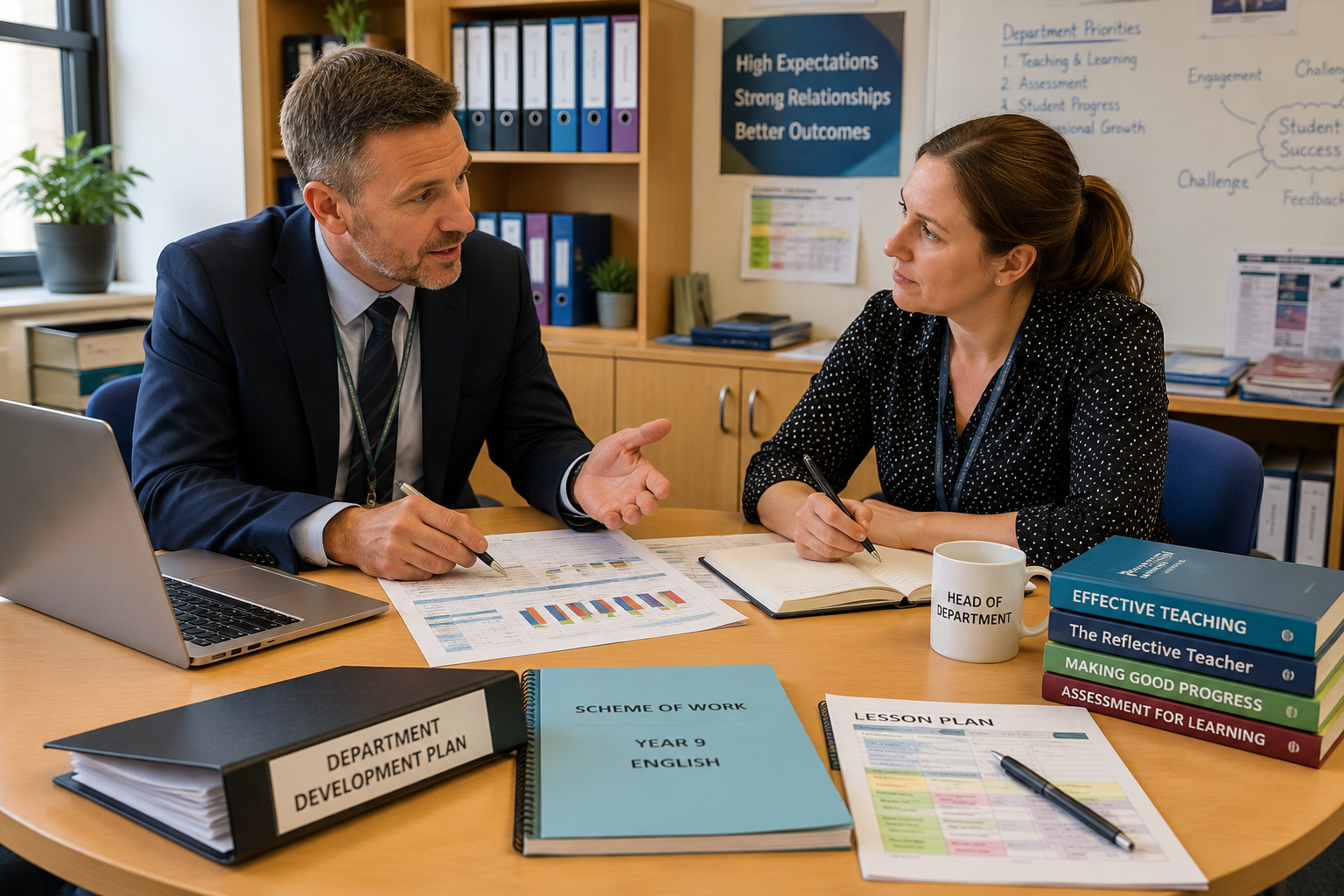
How to Support an Underperforming Teacher: A Practical Guide for Heads of Department
Knowing how to support an underperforming teacher is one of the more difficult responsibilities of a Head of Department (HOD). When a teacher’s performance begins to decline, the natural reaction may be to focus immediately on what needs to change. However, effective teacher performance management starts with a more important question:
Why is the teacher underperforming in the first place?
Poor performance is rarely as simple as a lack of effort or commitment. Burnout, personal circumstances, changing curriculum requirements, inadequate professional development, classroom management difficulties, workload pressures and a lack of resources can all affect a teacher’s effectiveness.
For a HOD, the challenge is to balance teacher support and wellbeing with professional accountability. By identifying the causes of underperformance, having honest conversations, creating an individualised improvement plan and monitoring progress, HODs can give teachers a genuine opportunity to improve.
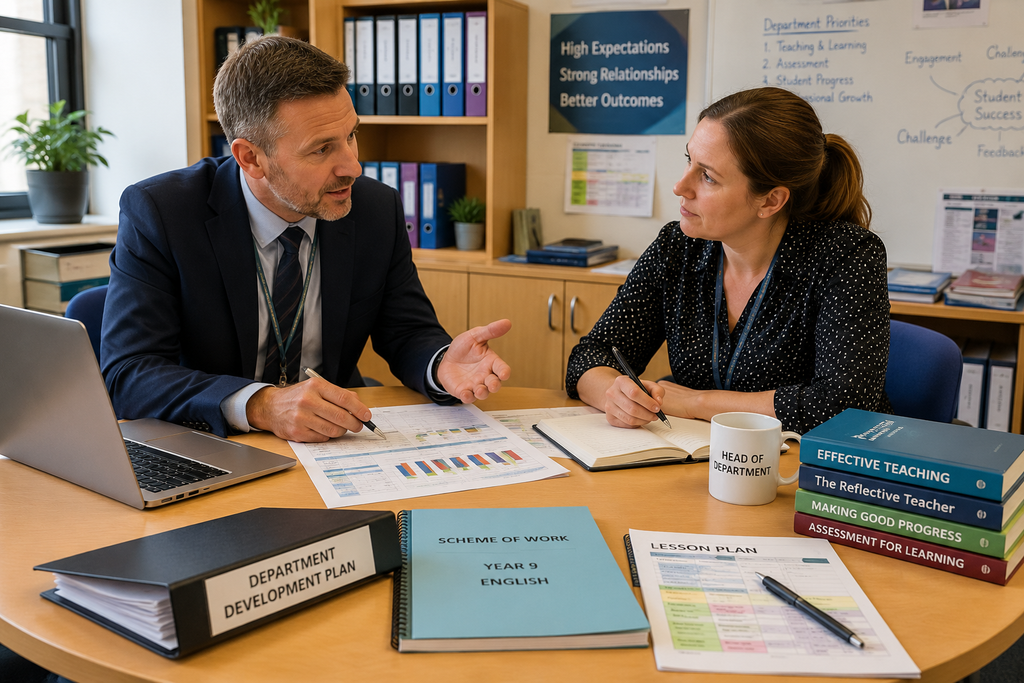
How to Support an Underperforming Teacher
Before implementing a teacher performance improvement plan, take time to understand what is causing the problem.
A decline in performance may be related to circumstances outside the teacher’s immediate control. For example, a teacher may be experiencing:
- Burnout or excessive workload
- Personal or family difficulties
- Changes to curriculum requirements
- Insufficient training or professional development
- Classroom management challenges
- Increasing student needs
- Inadequate teaching resources
- Difficult class allocations
- Assessment and reporting pressures
- A mismatch between teaching approaches and student needs
This does not mean that poor performance should be ignored. Rather, it means that an HOD should avoid assuming that the problem is simply a lack of motivation or professionalism.
Look Beyond the Symptoms
If student engagement has declined, for example, the underlying issue may not be a lack of commitment. The teacher may be struggling with classroom behaviour, an unfamiliar curriculum or a particularly challenging cohort.
Similarly, if assessment results have deteriorated, the problem may involve assessment design, curriculum planning, student attendance or insufficient preparation time.
Effective HOD leadership requires curiosity before judgment.
Creating an environment where teachers feel safe discussing genuine difficulties can reveal problems that might otherwise remain hidden.
Have Compassionate and Honest Conversations
The first step when you need to support an underperforming teacher is to have an honest, private conversation about what is happening.
Traditional performance management can sometimes feel punitive, causing teachers to become defensive. A more productive approach is to frame the initial conversation around support, problem-solving and professional improvement.
Before meeting with the teacher, gather specific evidence. This might include:
- Classroom observation notes
- Student achievement data
- Assessment results
- Student engagement information
- Feedback from colleagues
- Examples of incomplete or inappropriate work
- Relevant professional expectations
Avoid relying on vague statements such as “your teaching isn’t good enough.” Instead, identify specific behaviours or outcomes that need to change.
During the conversation, ask open-ended questions such as:
- “How are you feeling about your current workload?”
- “What challenges are you experiencing in the classroom?”
- “Is there an area of your teaching where you would like additional support?”
- “What do you think is contributing to the current difficulties?”
- “What would help you improve your effectiveness?”
Most importantly, listen to the answers.
Active listening does not mean accepting every explanation uncritically. It means giving the teacher an opportunity to explain their perspective before deciding what action is appropriate.
Combine Empathy with Accountability
Compassionate leadership does not mean lowering professional standards.
A teacher can be experiencing genuine difficulties while still needing to meet reasonable professional expectations. The role of the HOD is to recognise both realities.
A useful message is:
“I want to support you, but we also need to address these concerns.”
This approach establishes that the purpose of the process is improvement rather than punishment.
Support an Underperforming Teacher with an Individualised Teacher Improvement Plan
Once the underlying issues have been identified, develop a personalised teacher support plan.
A generic performance improvement strategy is unlikely to work if it does not address the specific reasons for underperformance. Instead, work collaboratively with the teacher to determine what support would make the greatest difference.
Depending on the circumstances, this could include:
- Targeted professional development
- Mentoring by an experienced teacher
- Additional planning time
- Classroom observations
- Peer observation
- Support with behaviour management
- Assistance with assessment design
- Access to teaching resources
- Collaborative lesson planning
- Workload adjustments where appropriate
- Support from specialist staff
The teacher should have a meaningful role in developing the plan. Collaboration increases ownership and makes it more likely that the strategies will be implemented successfully.
Set Clear and Measurable Performance Goals
A teacher improvement plan should include specific, measurable and achievable goals.
Avoid vague objectives such as:
“Improve classroom management.”
Instead, establish a measurable objective such as:
“Implement three agreed classroom management strategies consistently and review their impact during fortnightly observations over the next eight weeks.”
Similarly, rather than simply asking a teacher to “improve student engagement”, establish a specific indicator that can be monitored.
Clear goals provide three important benefits:
- The teacher knows exactly what is expected.
- The HOD can provide targeted support.
- Progress can be evaluated objectively.
The goals should also have realistic timelines. Improvement rarely happens overnight, particularly when the underlying problem involves workload, confidence or professional skill development.
Provide Ongoing Support and Regular Check-Ins
A teacher performance improvement plan should not be created and then forgotten.
Schedule regular meetings to discuss progress, identify barriers and adjust the support being provided. Monthly meetings may be appropriate in some situations, while more frequent meetings may be necessary during an intensive improvement period.
These meetings should address questions such as:
- What has improved?
- What remains difficult?
- What strategies are working?
- What additional support is needed?
- Are the agreed goals still appropriate?
- What should happen next?
Regular check-ins also provide opportunities to recognise progress.
Celebrate Small Improvements
Improvement can be gradual. A teacher who previously struggled with classroom management may make significant progress simply by creating more consistent routines.
Recognising these improvements is important.
Positive feedback reinforces effective behaviour and demonstrates that the HOD is genuinely invested in the teacher’s success.
Create a Departmental Culture That Supports Improvement
Supporting an underperforming teacher should not occur in isolation. Department culture can have a significant influence on teacher performance.
A department where teachers regularly collaborate, share resources and discuss challenges is more likely to identify problems early and provide informal support before difficulties become serious.
Consider establishing:
- Peer mentoring
- Collaborative planning
- Non-evaluative peer observations
- Professional learning groups
- Shared teaching resources
- Regular discussions about effective teaching strategies
These practices also help remove the stigma associated with asking for help.
The message should be that all teachers are continually developing their professional practice, not that professional learning is something only struggling teachers need.
Address Systemic Causes of Teacher Underperformance
An important responsibility of an HOD is to determine whether the problem is actually individual or whether school and departmental systems are contributing to teacher underperformance.
Ask yourself:
- Does the teacher have adequate planning time?
- Is their workload reasonable?
- Are resources readily available?
- Is the teacher teaching subjects they are qualified and prepared to teach?
- Are class sizes or student behaviour creating unreasonable challenges?
- Are administrative requirements excessive?
- Are scheduling arrangements preventing effective collaboration?
If systemic problems are contributing to poor performance, addressing the teacher alone will not solve the problem.
Effective middle leadership therefore involves not only supporting individual teachers but also identifying and removing organisational barriers to effective teaching.
Monitor, Document and Review Progress
Good documentation is an essential part of effective teacher performance management.
Keep accurate records of:
- Meetings
- Agreed goals
- Support provided
- Professional development undertaken
- Classroom observations
- Feedback
- Evidence of improvement
- Areas that remain problematic
Documentation protects both the teacher and the HOD by creating a clear record of what has been discussed and agreed.
It is also important to distinguish between supportive performance management and formal disciplinary processes. If a teacher does not improve despite appropriate support, the HOD may need to involve senior leadership and follow the school’s formal performance management procedures.
Any formal process should be consistent with the school’s policies, employment arrangements and applicable industrial or legal requirements.
What If the Teacher Does Not Improve?
Most HODs hope that effective support will result in improved teacher performance. In many cases, it will.
However, not every situation has a positive outcome.
If a teacher continues to underperform despite clearly communicated expectations, appropriate support and a reasonable opportunity to improve, the issue may need to move into a formal performance management process.
This does not mean abandoning empathy.
An effective HOD can maintain respect for the individual while remaining firm about professional standards. The teacher should understand what is required, what support is available and what the consequences may be if performance does not improve.
The key is to ensure that the process is fair, transparent, evidence-based and consistent with school policy.
The Role of the Head of Department
Managing an underperforming teacher is one of the clearest tests of HOD leadership.
The best Heads of Department avoid two extremes. On one side is the temptation to ignore poor performance because confronting a colleague is uncomfortable. On the other is the temptation to move immediately into punitive performance management without understanding the underlying problem.
Effective HODs find the middle ground.
They support without enabling, challenge without humiliating, and maintain accountability without losing empathy.
This approach creates better outcomes not only for the individual teacher but for the entire department.
How to Support an Underperforming Teacher: Final Thoughts
Addressing teacher underperformance requires a careful balance between compassion and accountability.
Start by understanding the root causes. Have honest and respectful conversations. Develop an individualised teacher improvement plan. Provide practical support, establish measurable goals and monitor progress consistently. Ultimately, the aim when you support an underperforming teacher should be meaningful improvement rather than simply documenting poor performance.
At the same time, maintain clear professional expectations and be prepared to escalate to formal performance management when sustained support does not result in sufficient improvement.
Ultimately, most teachers want to do a good job. When an experienced HOD takes the time to understand what is getting in the way, provides meaningful support and creates a clear pathway towards improvement, underperformance can often become an opportunity for professional growth, stronger teaching and better outcomes for students.
